TECHNICAL INFORMATION
TECHNIQUE
Lithographie originale
ÉDITION
Limited edition of 197
DATE D’ÉDITION
1957
RÉFÉRENCE
“The Official Catalog of the Graphic Works of Salvador Dali” by Albert Field, Ref. 57-2, pages 124-125. Published by The Salvador Dali Archives.
Description
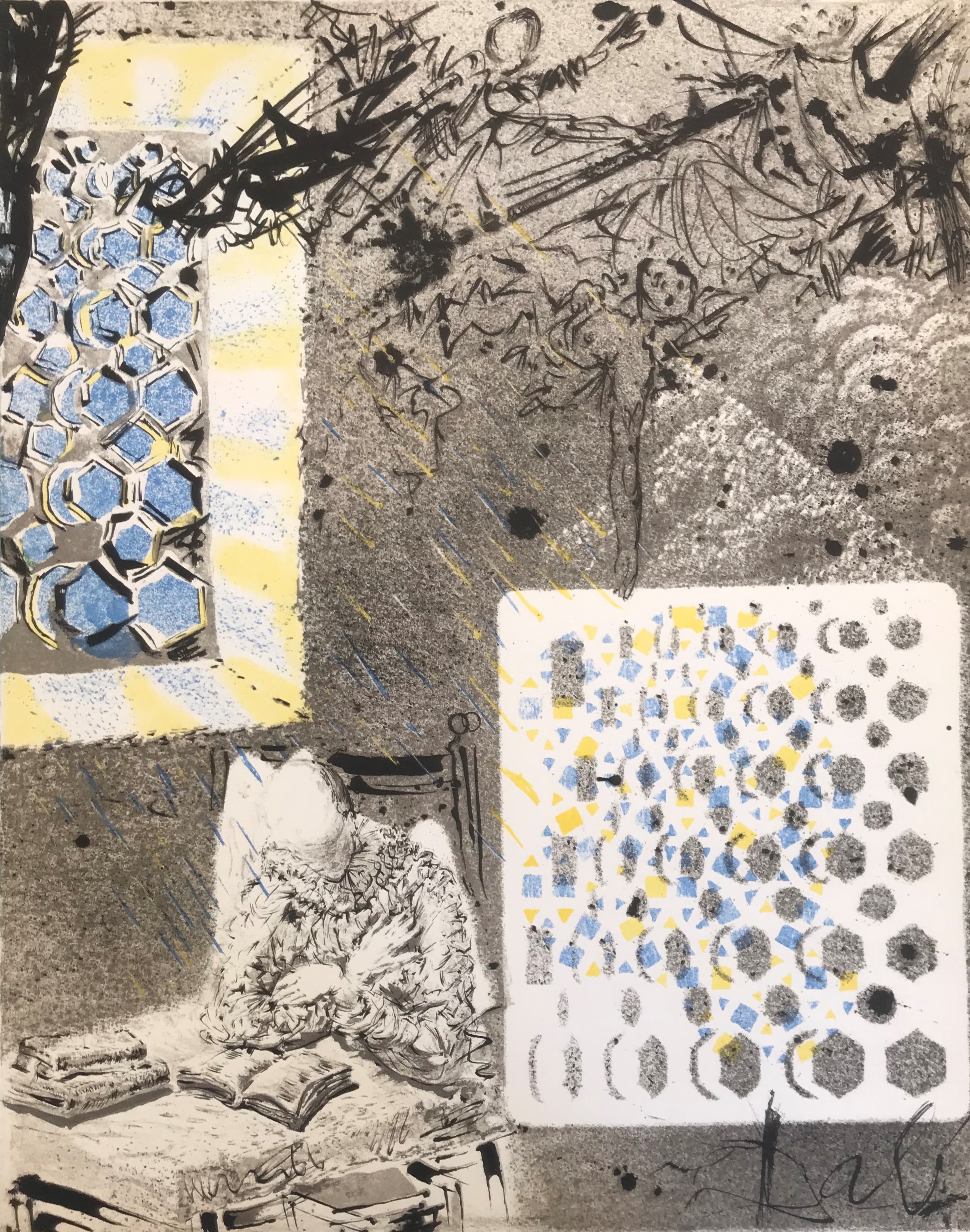
In 1957, the distinguished publisher Joseph Forêt commissioned Salvador Dalí to create an extraordinary suite of illustrations for Miguel de Cervantes’ masterpiece, Don Quixote.
For this ambitious project, Dalí employed a highly unconventional technique that would later become one of the most celebrated aspects of the series. Rather than relying solely on traditional brushes and paint, he used an arquebus-like air gun to propel ink-filled pellets onto lithographic stones. The resulting explosions of ink created spontaneous forms and textures, providing the artist with unexpected visual stimuli from which to develop his compositions.
Pushing experimentation even further, Dalí reportedly dipped live snails into pigment and allowed them to crawl across the lithographic surface, leaving unique and unpredictable traces. Embracing chance as a creative force, he transformed accident into artistic invention.
The illustrations for Don Quixote thus emerged through a process of remarkable spontaneity and serendipity, perfectly reflecting Dalí’s fascination with the irrational, the unexpected, and the limitless possibilities of the imagination. Through this innovative approach, the artist brought new life to Cervantes’ timeless hero, celebrating the dreamlike world in which reality and fantasy become one.
Salvador Dalí expressed his surrealist vision of universal poetic and literary themes through a vast repertoire of images, characters, and allegories. Through these figures, Dalí established himself as an undisputed master of the graphic arts, constantly exploring new techniques, forms, and colors.